The Best Credit Card for Newcomers
New to Canada with no credit history? RBC's newcomer offer gives you a no-fee Cash Back Mastercard and $200 in extra cash back in your first three months. You don't need a Canadian credit history, and the offer runs until October 31, 2027. Here is how it compares with the other banks, and how to build your credit from day one.
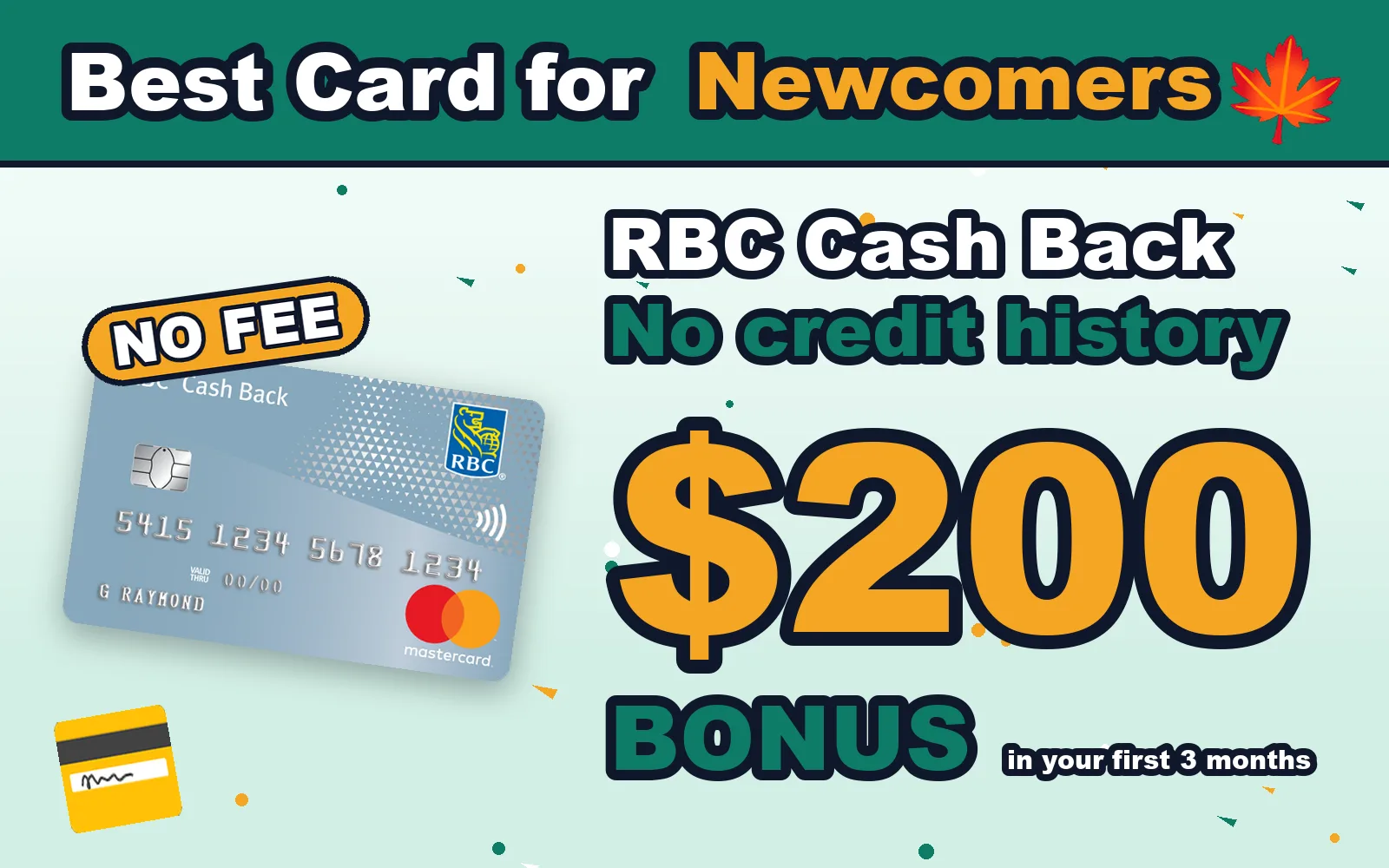
The whole post in one picture. The receipts are below.
Your credit history doesn't move with you
Your credit score from home stays at home. Canada's two credit bureaus, Equifax and TransUnion, "only collect information about your credit activity in Canada," according to the federal government's consumer agency. So on your first day here, your file is empty, whatever your record was before.
An empty file usually means a "no" from a regular card application. Equifax itself says lenders often turn newcomers down or offer them secured cards. That's why the big banks run newcomer programs: they approve you on your immigration status and your income instead of a credit score.
The newcomer programs, side by side
I checked each bank's own newcomer page on October 28, 2026. None of these programs asks for a deposit up front (BMO may ask for one if you don't qualify otherwise).
| Bank | Who qualifies | Limit with no history | Card bonus |
|---|---|---|---|
| RBC | Permanent residents and international students who arrived in the last 12 months; temporary workers in the last 48 months | Up to $15,000 (students up to $2,000) | $200, until Oct 31, 2027 |
| Scotiabank StartRight | Permanent residents in Canada 0–5 years, international students, foreign workers | Up to $15,000 | Regular public offers only |
| TD New to Canada | Permanent or temporary residents in Canada 5 years or less | Up to $15,000 for permanent residents | $150, ends Nov 2, 2026 |
| BMO NewStart | Permanent residents and foreign workers who arrived in the last 5 years | Not published | Up to $125, ends Oct 31, 2026 |
| National Bank | In Canada less than 5 years, with permanent or temporary status | Not published | $100 after 20 purchases, until Nov 3, 2026 |
| CIBC | New clients; age 25+ for the bundle bonus | Not on the page I could read | $100, only with a $500/month direct deposit |
"Up to $15,000" is a ceiling, not a promise. Every bank sets your limit from your income, so a new job at $50,000 won't get you $15,000 on day one.
My pick: RBC Cash Back Mastercard
The RBC Cash Back Mastercard is the card in RBC's newcomer offer. RBC pays the biggest bonus, and its offer runs for another year while TD's, BMO's and National Bank's end this week.
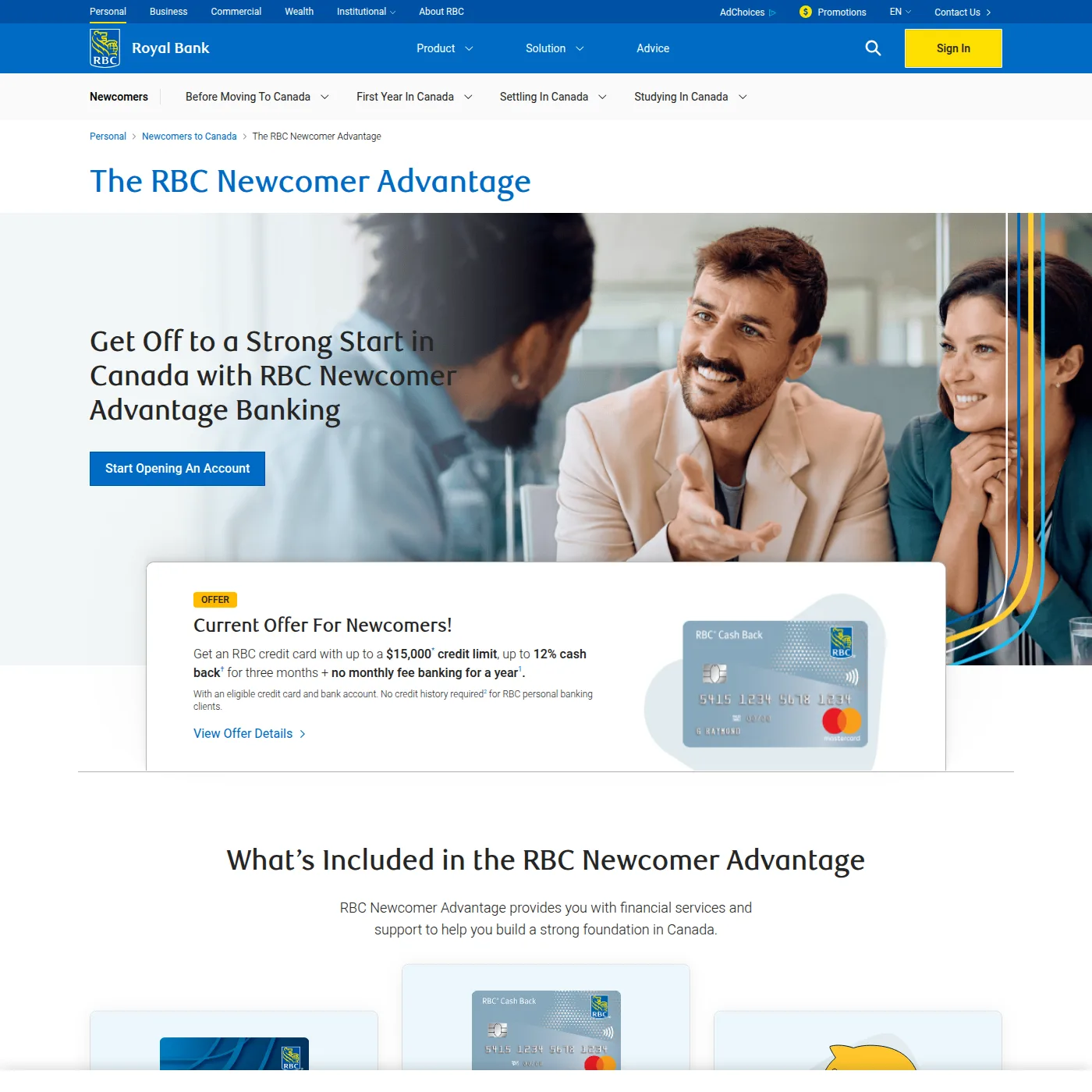
rbcroyalbank.com, October 28, 2026. Read the small print under the offer: "No credit history required for RBC personal banking clients". You need the RBC bank account too.
- The bonus: an extra 10% cash back on up to $2,000 of spending in your first three months. That's $200, on top of the card's regular rate. RBC's "up to 12%" headline is that 10% plus the 2% it pays on groceries.
- After that: 2% on groceries, 1% on gas, transit and rideshare, 0.5% on everything else. No annual fee. $500 a month of groceries earns $120 a year.
- How to apply: in an RBC branch, by October 31, 2027. Bring your passport, your PR card or work or study permit, and your SIN.
- The catch: you must have arrived recently (12 months for permanent residents and students, 48 months for temporary workers), and anyone who already holds an RBC credit card is excluded.
The bank account that comes with it, RBC Advantage Banking, has no monthly fee for 12 months, then $12.95 a month. Set a reminder to switch to a cheaper account before then.
If you're past RBC's window: TD or Scotiabank
Arrived more than a year ago as a permanent resident? RBC's no-history rule no longer covers you, but TD's and Scotiabank's do, for up to five years.
- TD: a $150 bonus on the TD Cash Back Visa when you spend $1,500 in three months, but the account must be approved by November 2, 2026. After that date, expect TD's regular offers.
- Scotiabank StartRight: no special card bonus, but one feature no other bank has. It can use your credit history from back home through a service called Nova Credit, to give you a higher limit.
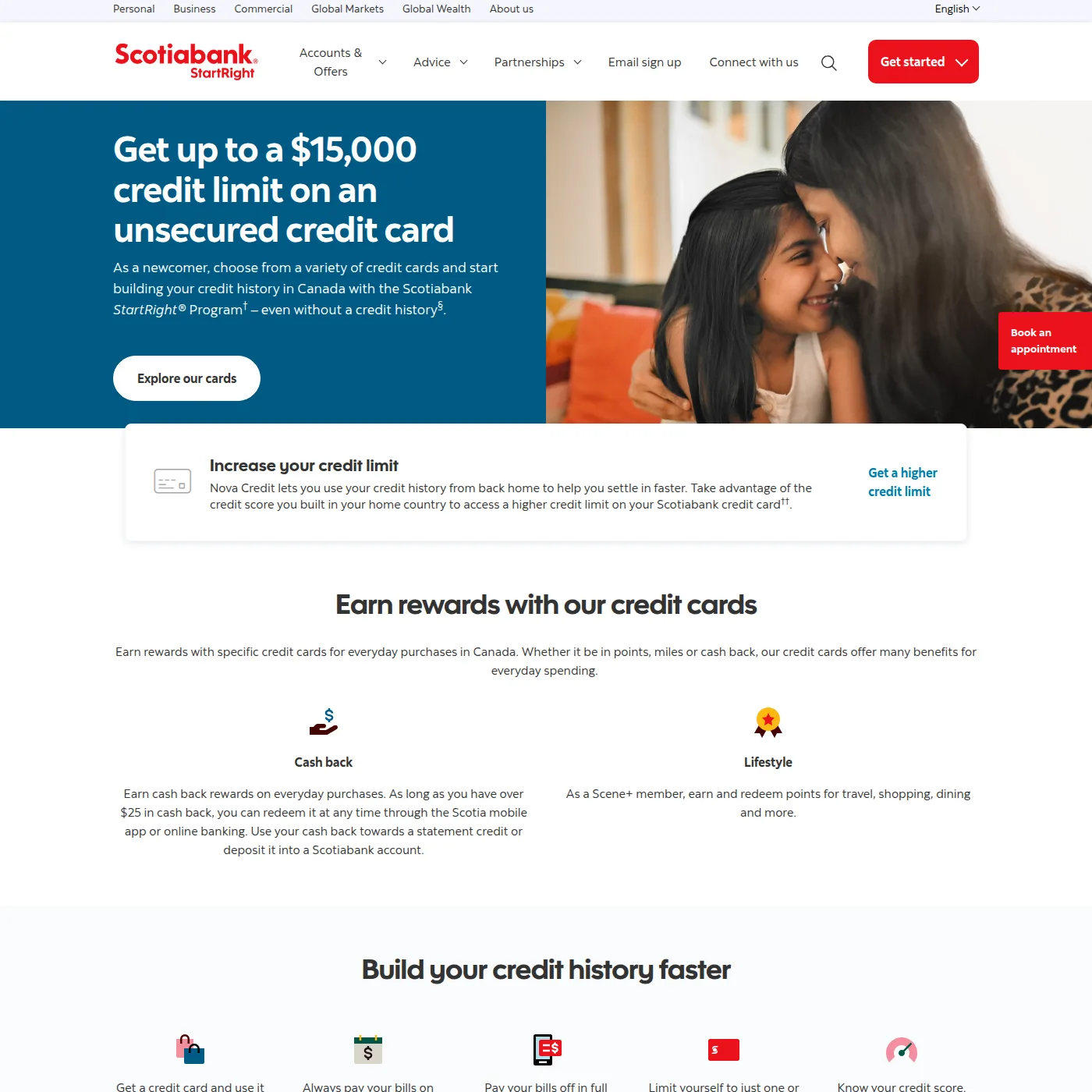
startright.scotiabank.com, October 28, 2026. The box under the headline is Nova Credit: your score from home, used for a higher limit here.
Scotiabank lists these countries for Nova Credit: Australia, Austria, the Dominican Republic, India, Kenya, Mexico, Nigeria, the Philippines, South Africa, South Korea, Spain, Switzerland, the United Kingdom, the United States and Ukraine. The list can change.
If you already have an American Express card from home
Amex Canada can approve you without a Canadian credit report if you already hold an Amex card issued by American Express in another country.
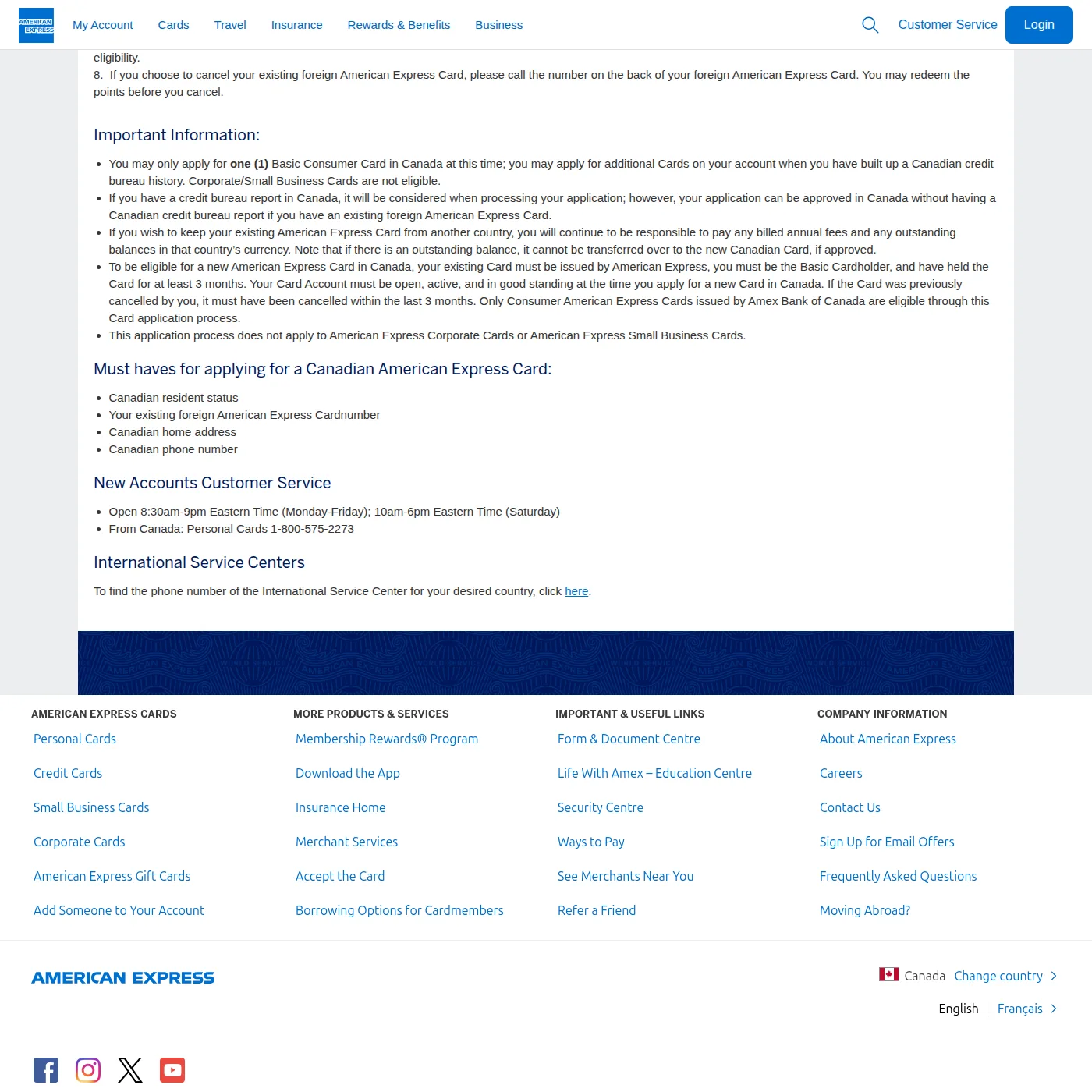
americanexpress.com/en-ca, October 28, 2026. The second bullet under "Important Information" is the one that matters. The "Must haves" are below it.
- You need: a card you've held for at least 3 months, in good standing, as the main cardholder, plus Canadian resident status, a Canadian home address and a Canadian phone number.
- The limits: one Canadian Amex card for now; more once you've built Canadian credit. Your balance from home doesn't transfer.
- Watch out: your card has to be issued by American Express itself. Some countries' Amex cards come from local banks, so check who issued yours.
If every bank says no: a secured card
A secured card works for almost anyone: you give a deposit, and it becomes your limit. The federal consumer agency suggests one for newcomers with no credit history. My full comparison is in What Is a Secured Credit Card?. The short version:
- Home Trust Secured Visa: deposit $500 to $10,000. No fee at 19.99% interest, or $59 a year at 14.90%. Not available in Quebec.
- Capital One Guaranteed Secured Mastercard: no fee, guaranteed approval if you meet four conditions, but 29.9% interest (21.9% in Quebec).
- Neo secured Mastercard: deposit from $50, but a $9.99 monthly membership.
Try a newcomer program first. A regular card with no deposit builds the same credit and doesn't tie up your cash.
What to bring to the branch
Most newcomer cards are opened in a branch. Bring:
- Proof of status: your PR card or Confirmation of Permanent Residence (IMM 5292), or your work or study permit.
- Photo ID: your passport, or a Canadian driver's licence.
- Your SIN.
- Proof of income, if you're on a work permit: Scotiabank asks foreign workers for a letter from their Canadian employer stating their annual income.
Build your Canadian credit from day one
Your file starts empty, so the first year counts the most.
- Pay on time, every time. Payment history is the biggest part of your score. Set up an automatic payment for the full statement balance.
- Keep your balance under 30% of your limit. On a $2,000 limit, that's a statement balance under $600, even if you pay in full every month.
- Apply for one card, then wait. Every application is a hard credit check. Your first card is enough for the first year.
- Check your report for free. Equifax and TransUnion both give it to you online at no cost. Be careful with other websites offering "free credit reports": the government warns that fraudsters use this trick.
And above all: pay the full balance every month. These cards charge about 20% to 22% interest. Carry $1,000 for a year and you pay around $210, more than the whole newcomer bonus.
Before you apply: confirm the live offer on the bank's own page. Everything in this post is dated October 28, 2026, the day it was written, and banks change their offers whenever they like. General information, not financial advice, and no affiliate links. Full details in our Terms of Use.